Part 1 Sakkara and Memphis
One day is nowhere near enough to take in all these ancient sites.
The day started at 9am (or was supposed to but our breakfast chef didn’t get the memo) so about 9.15 we headed to the car and our guide took us to the archaeological site of Sakkara.
Sakkara
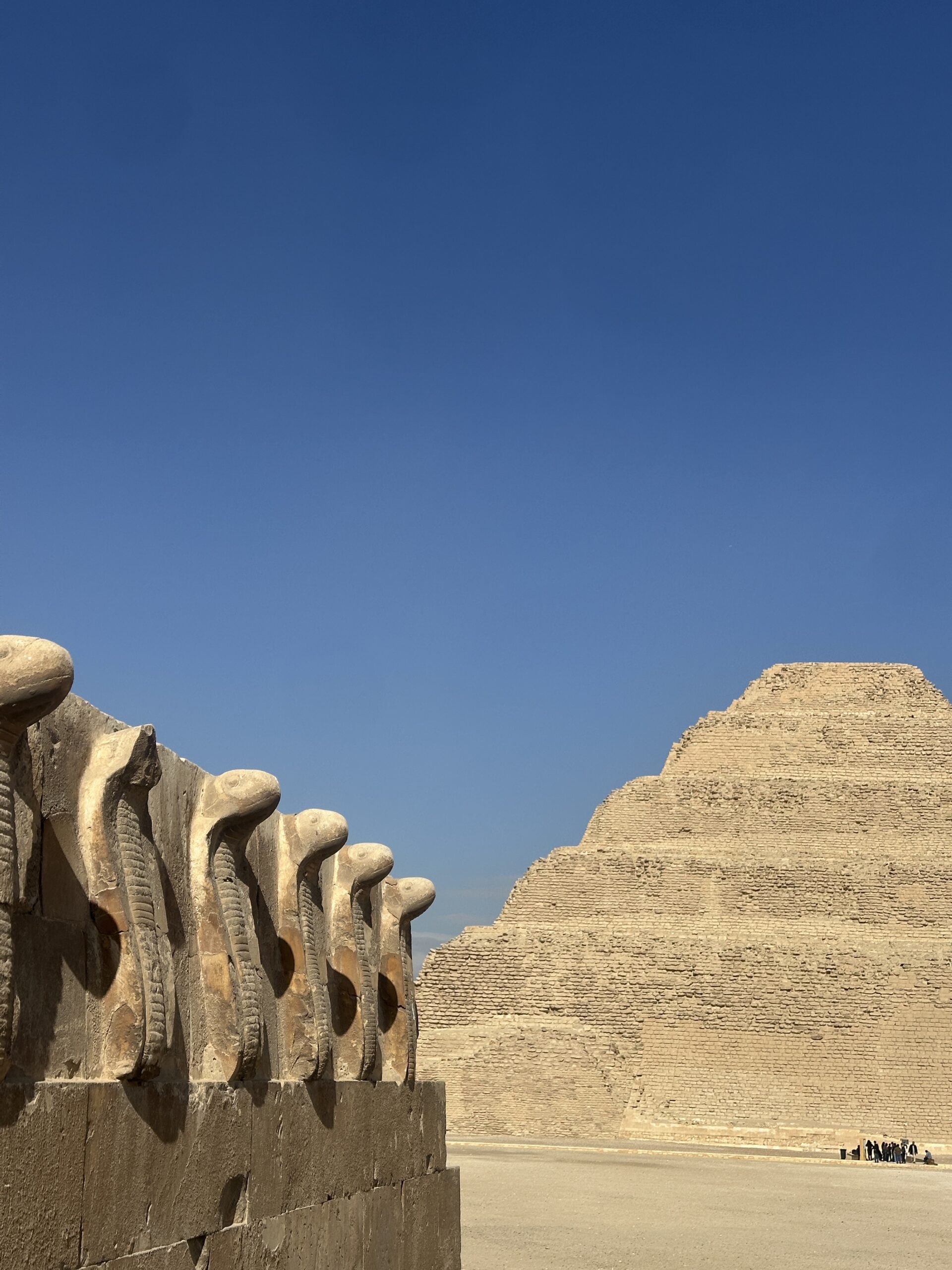
This is a vast site of tombs and including the oldest structure in human history – the first pyramid.
There’s so much to take in I couldn’t possibly relate all of it, but here are my highlights. The pyramid itself was incredible obviously, and for a ‘first go’ it’s currently been there for about 6000yrs, built by Imhotep – who apparently was an architect, a doctor and an artist, not just the
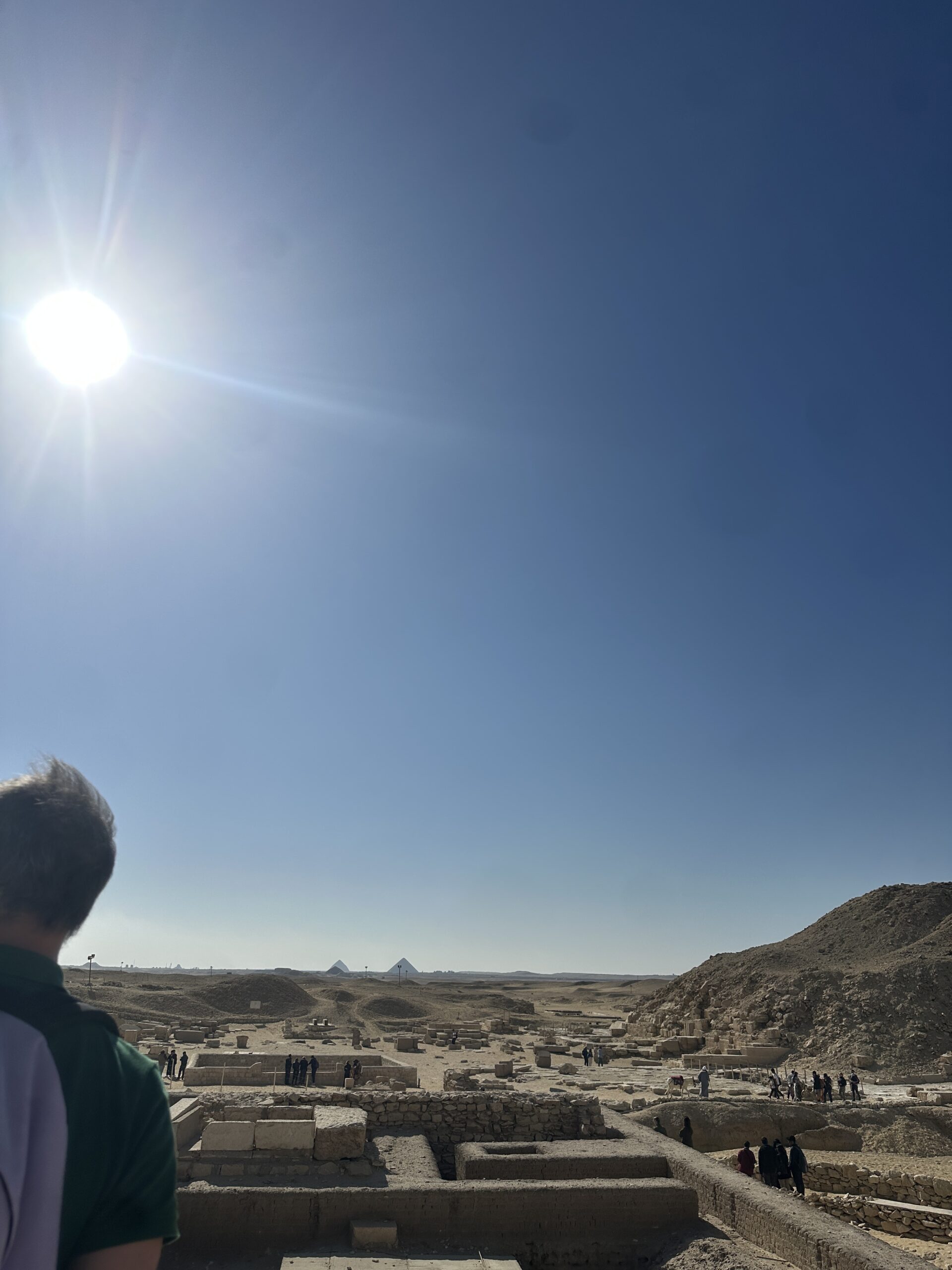
evil guy from the Mummy movies. We walked around the complex for The Step Pyramid of Djoser, which has a huge sandy plain in front,
and little alcoves to the side where papyrus paper was invented for writing things down, the first time records were kept without carving in stone, which was obviously quicker and indicated a huge development in the written word.
Surrounded by camels and men in Bedouin dress on horseback, the vista was like every Indiana Jones movie, the scale of it breathtaking.
Various sculptures of kings and cobras, all incomprehensibly old, lined the pathway to the next pyramid. “You can go inside” says the guide, casually, and we got in the queue. Before we knew it we were down what felt like a mining shaft from The Goonies, bent double in a hot line.
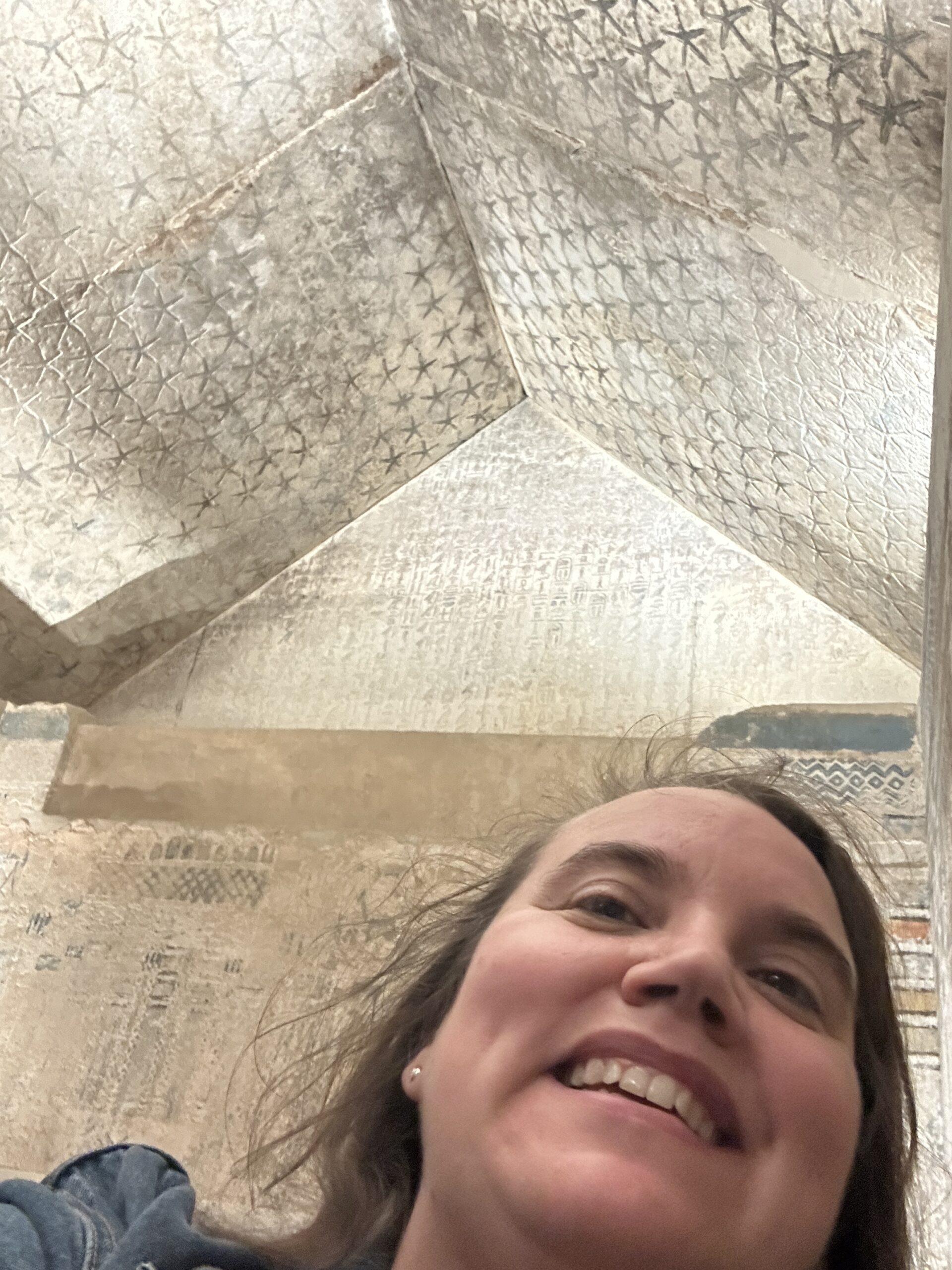
Before long the tunnel opened into a chamber with a high ceiling, engraved every inch with hieroglyphics. The stone had a silvery shimmer and did feel quite magical. Another scootch to the knees took us into the main tomb chamber, larger, engraved just as beautifully with a little of the blue colour still visible in some of the indentations. A huge sarcophagus in red granite lay open at the head of the chamber, the coffin of Unas, one of the ancient kings. It was amazing, but a lot of people were in a hot
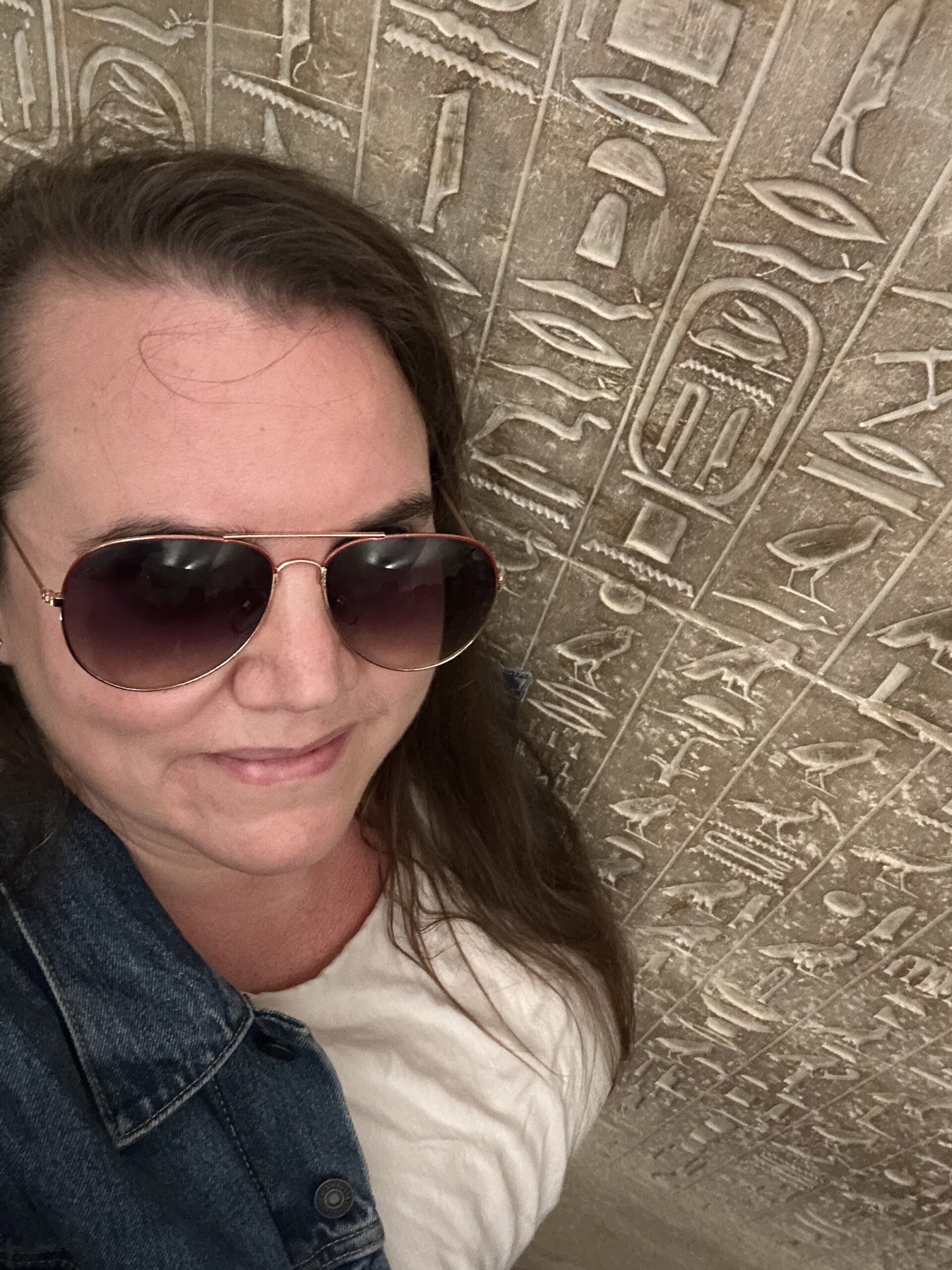
confined space, so we didn’t linger for long. We crawled back out the mine shaft exit and made our way to the tomb of Princess Seshseshet (which is quite hard to say, even for our guide Mohammad).
My first impression of this tomb was the accuracy of the engravings of fish around the entrance – my diving days taught me a bit about reef fish, and the drawings were incredibly accurate. Considering the distance from the sea by foot/camel and that this would have been done from memory, the engravings were all the more impressive. I love things like this because it’s undeniable proof to my mind how intrinsic and essential artistic expression is to human beings. This was a form of record keeping, but the skill is evident. The freeze depicted different hunting and fishing methods, tools, boats, cows, and even hippos fighting crocodiles.
Much of the original colouring still remains intact and the main chamber includes the door to the afterlife.
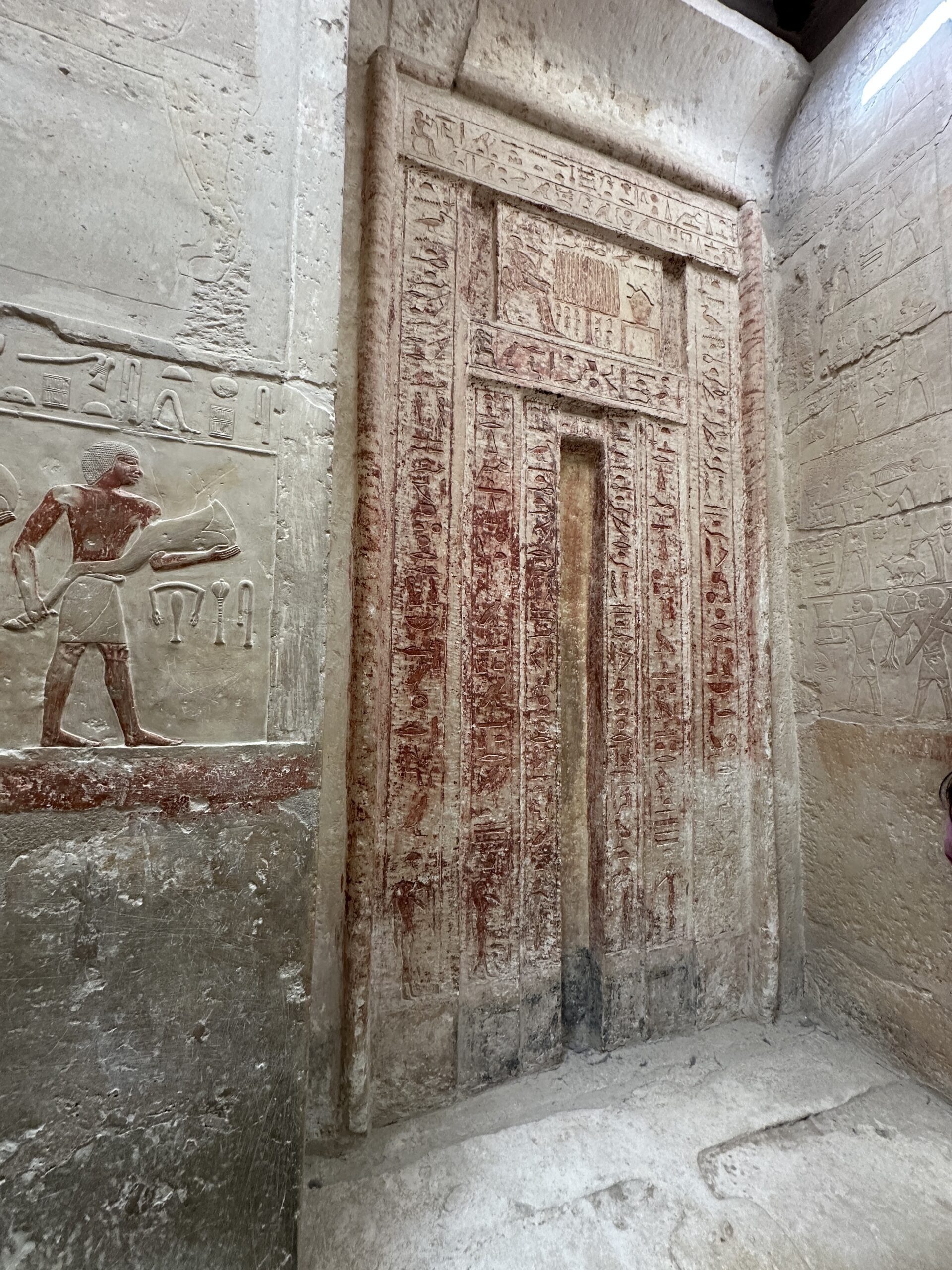
Our guide told us that when someone died it wasn’t considered sad, just that thy were passing into the afterlife, the next phase of life and that’s all anyone was focused on.
We took some more photos and left via the entrance surrounded by columns. I overheard another guide saying there were 20something vestibules in this entrance hall, each of which would have housed a statue of a king (or the king? I didn’t quite catch) but you can imagine how it must have felt walking between these huge carvings.
The whole thing took about 2hrs, and we left, our guide mentioned that he’d forgotten to get the number of the driver, so he left us at the entrance while he did some excavating of his own looking for our car.
Memphis.
Now thought Memphis was in Tennessee, but it turns out there is one in Egypt too. (And love is on the Atlas. Shows what I know).
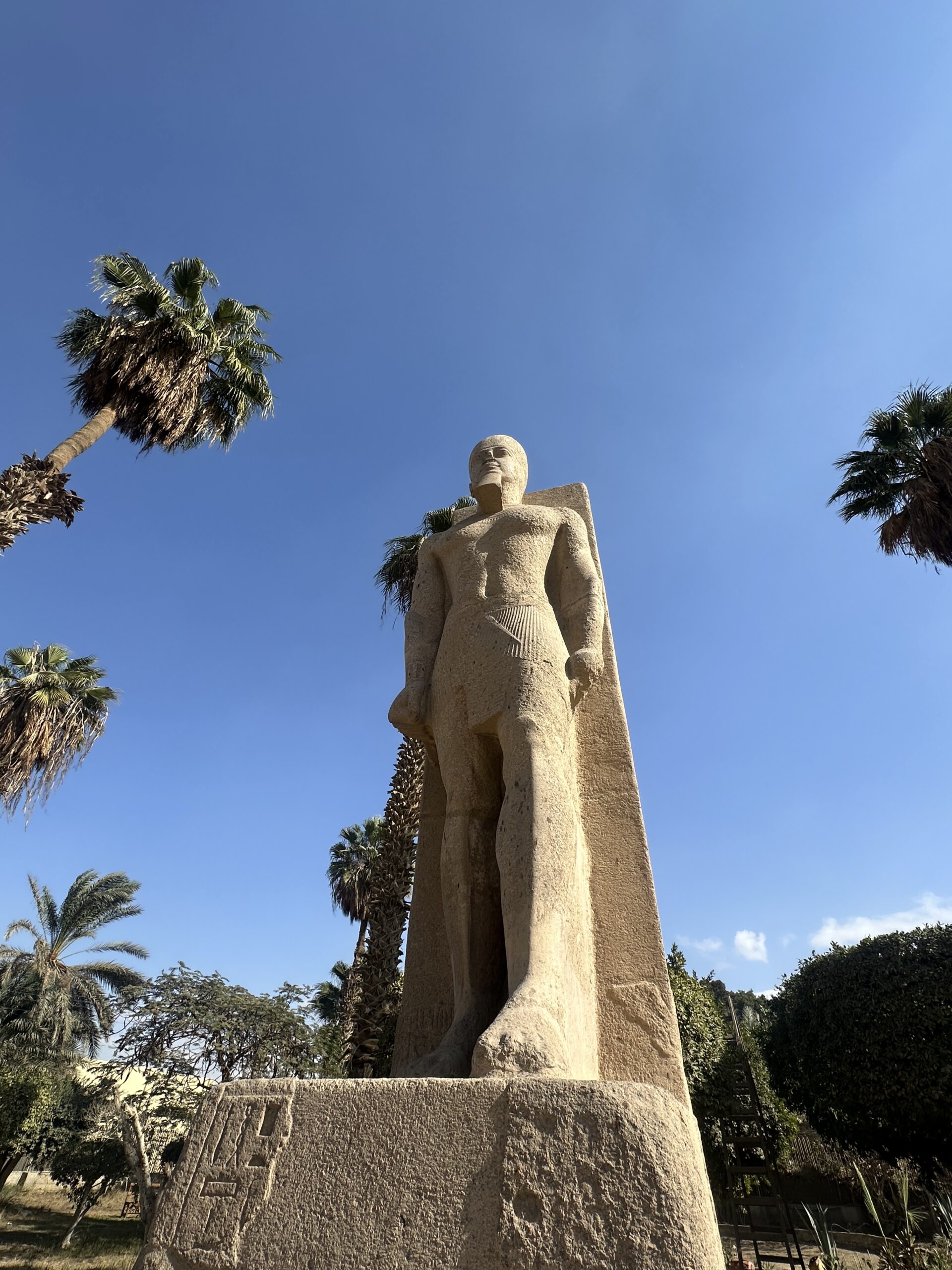
After a 10min drive, we got Memphis, another archeological site. This felt much more like an open air museum, with artefacts displayed around the complex. At the end of the walkway stood Ramses. (The sponsor of the special type of stomach upset you can get here if you don’t wash your hands enough “Ramses Revenge”). He was a popular king who lived to the amazing age of 90. By all accounts he was a bit of a looker as well, and his statue shows his muscular arms and legs. Lucky fella. Our guide told us lots of things about Ramses, but by this point I was pretty saturated with facts. I think one of the things he did was unite northern and southern Egypt, and was very organised, which is great for anyone who’s in charge of a lot of things. The stance, with one foot infront of the other, represents his ability to take strides forward and create stability. Something along those lines.
The walkway was lined with dozens of statues, engravings and sarcophagi (one of my new favourite plurals). There was a lot there but I think I remember the goddess of music being called Hoar/whore? And
had the ears of a cow. Make of that what you will.
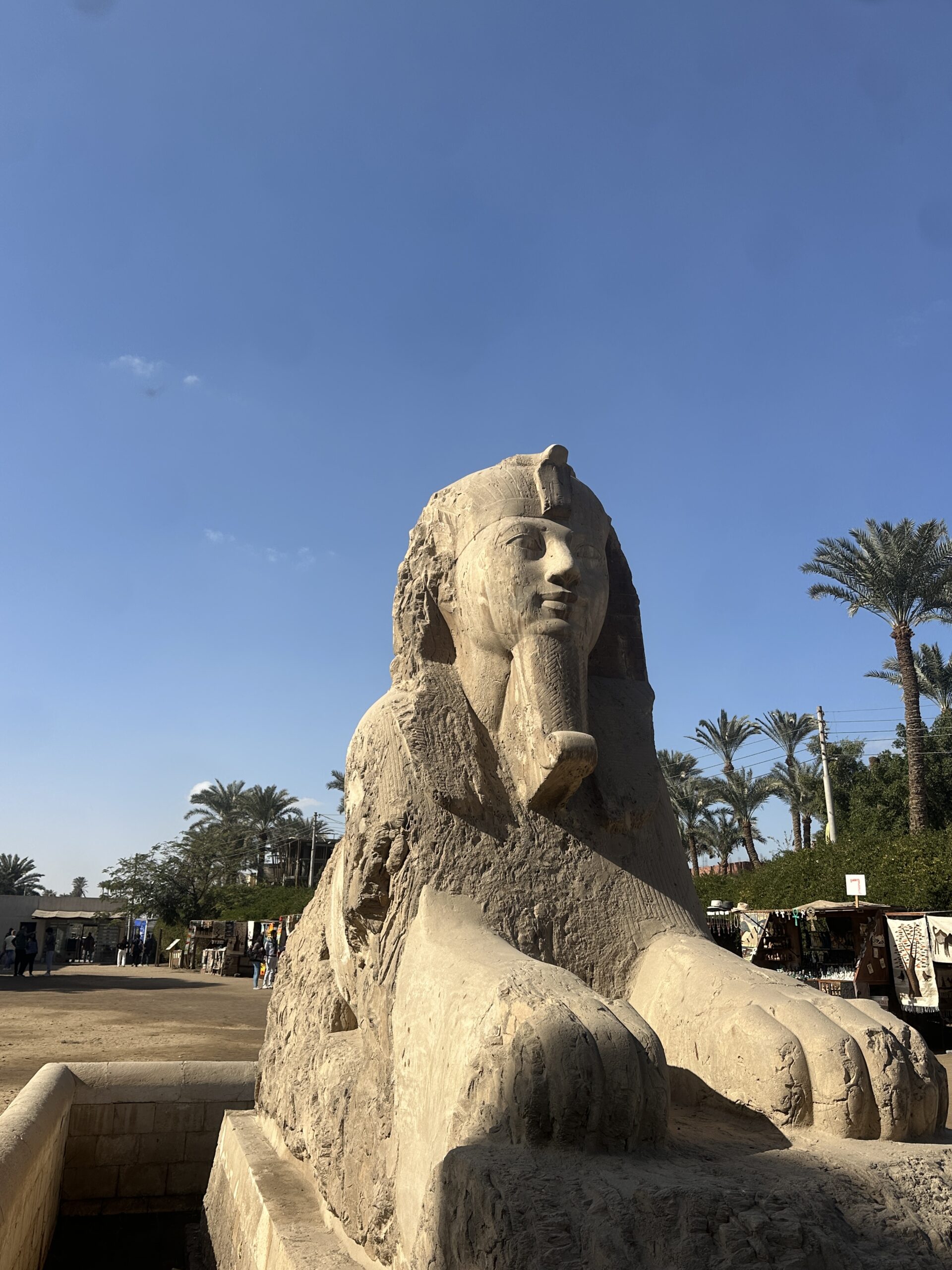
Another amazing statue was the sphinx like statue of Hatshepsut. I don’t remember anything about her, other than it was a woman’s face, lion paws, and the headdress that you see in the typical Pharos that goes behind the ears, is so that they can hear all around them. It’s a stunning statue tho and I took some nice pics against the palm trees and the bright blue sky.
To end our visit to Memphis, Mohammad took us to the inside part. This is where the remains of a – let me get the measurements right – totally
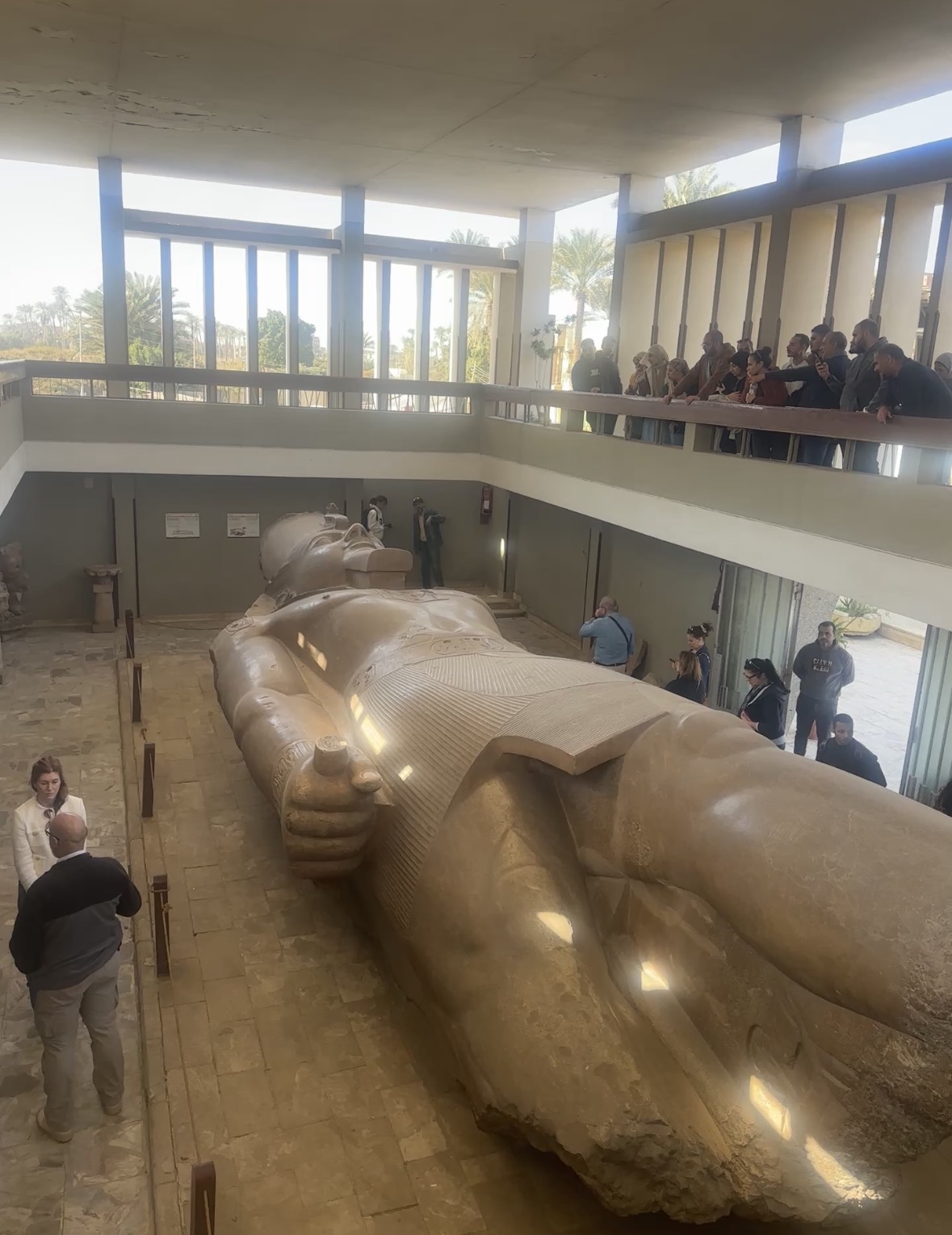
humongous statue of Ramses lies. The legs have broken down so it’s lying in a chamber with a first floor walk way, so you can view from above. Again, stunningly beautiful, accurate and detailed. Carved in granite I think.
While we were there, our guide’s uni Professor passed us with a group of his own. I enjoyed seeing Mohammad’s little smile of pride that he was there with two white peeps, putting his degree to good use. He’s obviously very proud of and passionate about his heritage, and rightly so.
We took some selfies and ‘knuckles’ with Ramses and headed back to the car to finish the day at The Pyramids.
No comments